Looking for specific financial advice?
This blog provides general educational content. For personalized advice tailored to your unique situation, book a free consultation with our team of ASIC-licensed financial advisers.
If you run a business, you’re exposed to risks employees and PAYG taxpayers rarely face: lawsuits, unpaid invoices, tax debts, lease obligations, and loan guarantees. Asset protection is about reducing the chance that a business problem becomes a personal financial disaster.
In Australia, “asset protection” isn’t about hiding money or dodging creditors. It’s about legal, sensible planning: choosing structures carefully, separating personal and business finances, documenting arrangements, using insurance, and avoiding avoidable personal exposure. Done early, it can also support smoother succession and wealth-building.
Quick answer: what actually protects a business owner’s wealth?
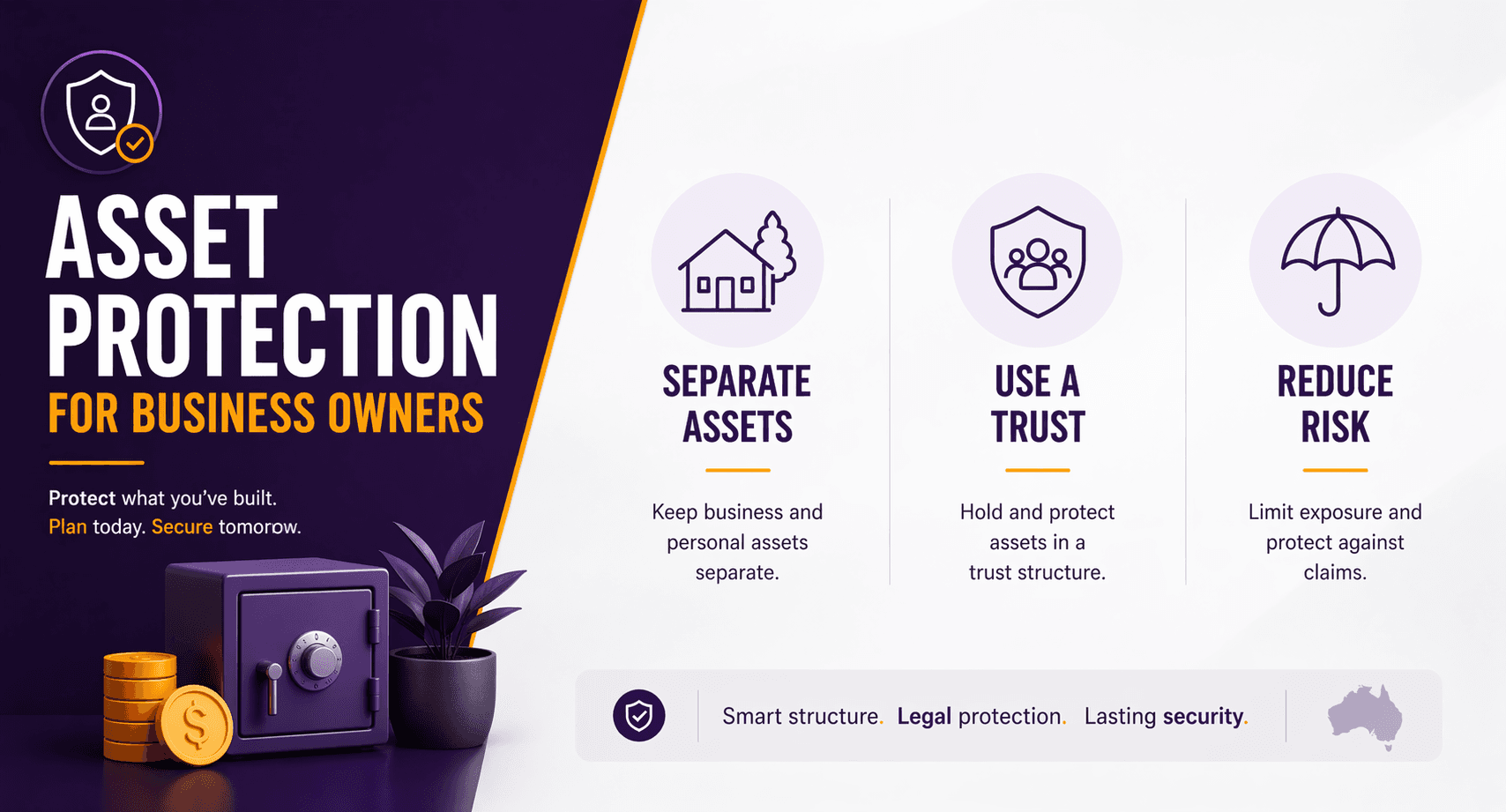
The most effective legal asset protection usually comes from a combination of:
The right business structure (often a company or trust structure, depending on your circumstances)
Clear separation between personal and business assets and bank accounts
Limiting personal guarantees and unsecured personal exposure
Appropriate insurance (business and personal)
Strong contracts, credit policies, and record-keeping
Ongoing compliance with ATO, ASIC and workplace obligations
No strategy is perfect, and outcomes depend on your facts and on current ATO / ASIC / court and Services Australia rules.
What risks are you trying to protect against?
Before choosing structures or moving assets, identify your “risk map”. Common threats include:
A customer or third party claim (professional negligence, property damage, injury)
Employee disputes and workplace claims
Unpaid supplier debts and loans
ATO liabilities (GST, PAYG withholding, super guarantee) subject to current ATO rules
Director and officer exposure (including insolvent trading allegations) subject to current ASIC/corporations law
Lease and equipment finance obligations
A good plan prioritises high-probability, high-impact risks first.
Which business structures help with asset protection?
Is a sole trader structure risky?
Sole traders generally have unlimited personal liability. If the business can’t pay, creditors may pursue your personal assets (subject to legal process). That’s why sole trader structures often suit low-risk, early-stage operations, but can become less appropriate as revenue, staff and contracts grow.
Does a company structure protect personal assets?
A company is a separate legal entity. In many situations, company debts stay with the company, which can provide a layer of protection for shareholders. However, this protection can be weakened by:
Personal guarantees to banks, landlords, or suppliers
Director duties and penalty regimes (including certain tax-related director penalty rules) subject to current ATO rules
Poor record-keeping, insolvent trading concerns, or mixing personal and company money
Can a trust improve asset protection?
Trusts (including family trusts) can help separate control from ownership and may support asset protection and estate planning. But trusts are not “magic shields”. Risks include:
Personal guarantees still apply if you sign them
Trustee liability (often managed by a corporate trustee)
Complexity and costs
Distribution, tax and compliance issues subject to current ATO rules
Because trusts can intersect with family law, succession, and tax, they’re best set up with coordinated legal and accounting advice.
What’s the role of a corporate trustee?
A corporate trustee (a company acting as trustee of the trust) is often used to limit liability to the assets of the trustee company, rather than exposing individuals directly. It doesn’t remove risk entirely, but it can be a useful risk-management layer when combined with good governance.
How do you separate personal and business assets properly?
Courts and regulators take separation seriously. Practical steps include:
Separate bank accounts and cards for business vs personal
Clear bookkeeping, invoices and contracts in the correct entity name
Written agreements for related-party transactions (loans, rent, equipment hire)
Market-rate payments where appropriate and clean documentation
Avoid using business funds for private expenses (and vice versa)
This isn’t just about optics. Poor separation can create tax issues and can undermine the credibility of your asset protection position if challenged.
How can you reduce exposure from personal guarantees?
Personal guarantees are one of the biggest “leaks” in otherwise solid structures. They commonly show up in:
Business loans and overdrafts
Commercial leases
Equipment and vehicle finance
Trade credit accounts
Ways to reduce risk (where you have negotiating power) include:
Asking for a capped guarantee amount
Time-limiting guarantees (e.g., reviewed after a period of good performance)
Using security tied to a business asset rather than a broad personal guarantee
Avoiding cross-collateralisation that drags in your family home
You may not be able to eliminate guarantees, but you can often clarify and narrow them.
What insurance should business owners consider?
Insurance doesn’t “protect assets” directly, but it can prevent a claim from becoming a forced asset sale.
Common covers to discuss with an insurer or broker:
Public and product liability
Professional indemnity (if you provide advice/services)
Workers compensation (state/territory based)
Cyber insurance
Management liability / directors and officers cover
Business interruption
On the personal side, business owners often consider life, TPD and income protection held personally or via superannuation, subject to current ATO and super fund rules. Whether that’s appropriate depends on your situation and funding strategy.
Can superannuation be part of asset protection?
Super can be a long-term wealth vehicle, and in many circumstances super benefits have protections from creditors. However, the details matter, and rules can change. Contributions, access conditions, and any protection outcomes are subject to current ATO rules and superannuation law.
Also note: moving money into super purely to defeat creditors can raise legal risks. Asset protection should be proactive, not reactive.
What legal and admin hygiene reduces your risk fastest?
Asset protection often fails because of avoidable admin gaps. Prioritise:
Up-to-date contracts, terms of trade, and clear scopes of work
Credit checks and sensible payment terms
Tight invoicing, follow-up processes, and debt collection escalation
Workplace compliance (policies, pay, super guarantee, safety) subject to current rules
Regular BAS/IAS and tax lodgements, and clean payroll processes
Minutes/resolutions where required for companies and trusts
Think of this as “risk reduction” rather than paperwork for paperwork’s sake.
How do family law and succession affect asset protection?
Business owners often focus on external creditors and forget internal risks:
Relationship breakdown can affect control and value of business interests
Death or incapacity can create disputes and operational paralysis
Depending on your circumstances, tools may include wills, testamentary trusts, shareholder agreements, buy–sell arrangements, and enduring powers of attorney. These aren’t just estate planning documents, they can protect the business from disruption.
FAQs
1 .Is asset protection legal in Australia?
Yes, when it’s genuine, properly documented, and not designed to defeat creditors. Asset protection should be implemented early and maintained through good governance. Attempts to transfer or hide assets when claims are looming can be challenged under Australian law.
2. Should I put my house in my spouse’s name to protect it?
This is risky and can backfire. Transfers may trigger stamp duty and tax consequences, and may not work as intended if challenged. It can also create issues in relationship breakdown scenarios. Get legal and tax advice before changing ownership.
3. Does a company fully protect directors from business debts?
Not fully. A company can limit shareholder liability, but directors can still face exposure through personal guarantees, certain tax-related regimes subject to current ATO rules, and director duties under corporations law. Strong compliance and careful signing authority matter.
4. Are family trusts “safe” from creditors?
Trusts can help separate assets, but outcomes depend on the trust deed, trustee arrangements, your role (e.g., guarantor), and the creditor’s claim. Trusts add complexity and need ongoing administration to work as intended.
5. When should I review my asset protection plan?
Typically when you start hiring staff, sign a lease, take on debt, win larger contracts, change business partners, or your personal situation changes (marriage, separation, kids, inheritance). A regular annual check-in alongside tax planning is also sensible.
Asset protection for business owners is less about clever tricks and more about good structure, good separation, and good habits. The strongest results usually come from layering: choosing an appropriate entity, limiting personal guarantees, insuring key risks, tightening contracts and compliance, and planning for succession and family-life changes.
Book a business owner protection strategy session
If you want clarity on your biggest personal exposure points (guarantees, structure, insurance gaps, and cash-flow risk), book a business owner strategy session with What If Advice. We’ll help you map risks and questions to take to your accountant and solicitor.
General advice disclaimer: This information is general in nature and doesn’t consider your objectives, financial situation or needs. It isn’t legal, tax or personal financial advice. Consider seeking advice from a qualified professional and check details against current ATO, ASIC and Services Australia rules before acting.