Looking for specific financial advice?
This blog provides general educational content. For personalized advice tailored to your unique situation, book a free consultation with our team of ASIC-licensed financial advisers.
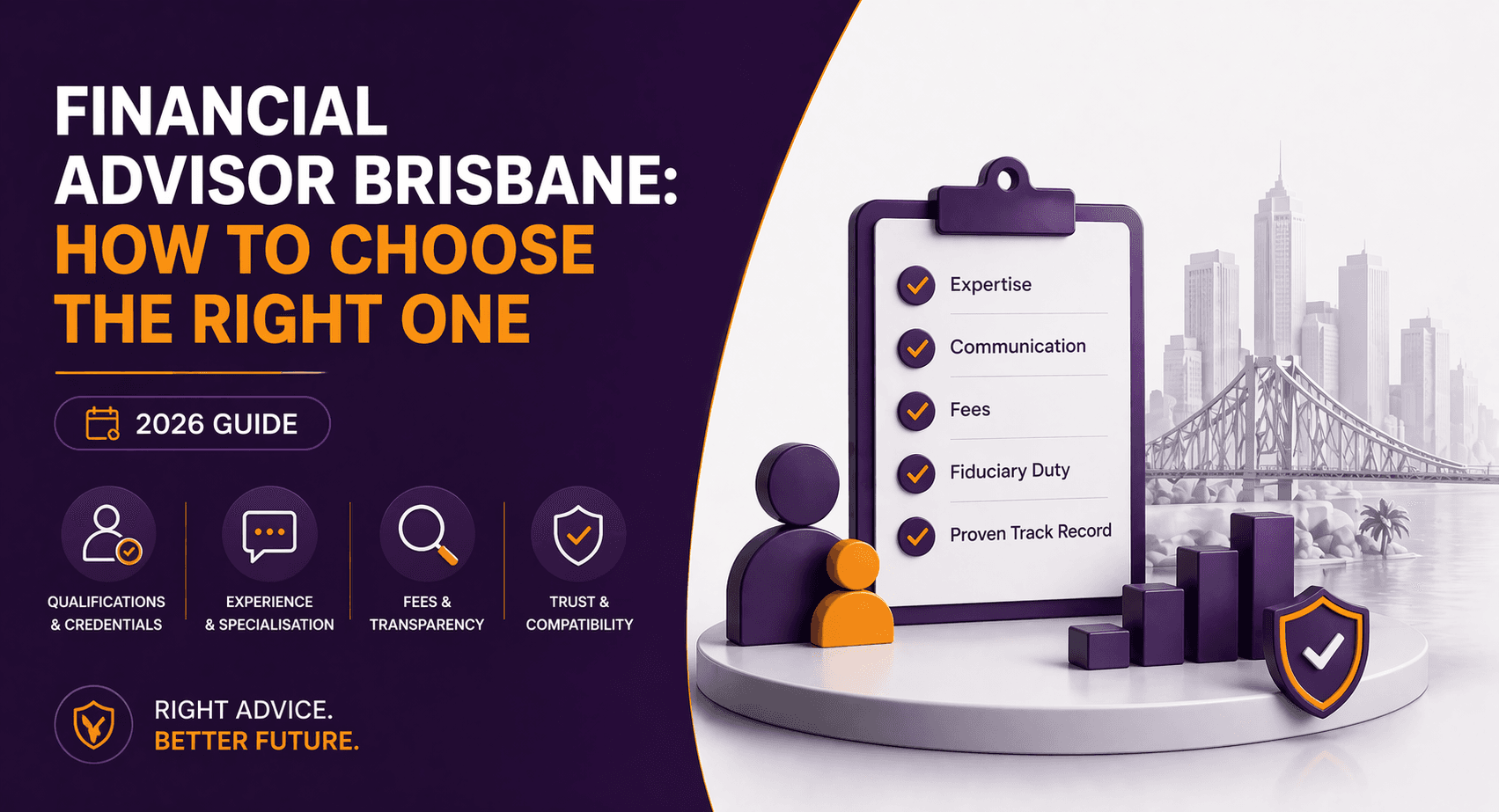
Financial Advisor Brisbane: How to Choose the Right One (2026 Guide)
Why this matters more than you think
At some point, most people realise they don’t just need more money. They need better decisions.
That’s usually when the idea of working with a financial advisor comes up. Maybe it’s about growing wealth, planning retirement, managing tax, or just getting some clarity around your next move.
But then comes the harder part.
How do you actually choose the right financial advisor in Brisbane?
Because not all advisors are the same. And choosing the wrong one can cost you more than just fees. It can cost you time, confidence, and missed opportunities.
In this guide, we’ll walk through how to choose a financial advisor the right way, what to look for, what to avoid, and how to make a decision you feel confident about.
Quick answer: How to choose the right financial advisor
In plain English:
Look for an advisor who is qualified, licensed, and transparent about how they’re paid
Make sure they offer advice that fits your situation, not a one-size-fits-all approach
Understand their fee structure before you commit
Choose someone who explains things clearly and doesn’t rush decisions
Focus on long-term strategy, not quick wins
The right advisor should help you feel clearer, not more confused.
What does a financial advisor actually do?
Before choosing one, it helps to understand what you’re actually hiring them for.
A financial advisor (or financial planner) can help with:
Superannuation strategy
Retirement planning
Investment strategy
Tax-effective structuring (within advice scope)
Cash flow and budgeting
Insurance and risk protection
Debt and wealth-building strategies
Some advisors specialise in certain areas, while others provide broader advice.
The key is making sure their expertise matches your needs.
Step 1: Get clear on what you need help with
This is where most people skip ahead and regret it later.
Before you even start comparing advisors, ask yourself:
Am I trying to grow wealth?
Do I need help with retirement planning?
Am I trying to reduce tax or structure things better?
Do I want ongoing advice or just a one-off plan?
For example:
A business owner might need structuring and tax strategy
Someone nearing retirement might need super and income planning
A young professional might need investment and savings strategy
Not every advisor is right for every situation.
Step 2: Check qualifications and licensing
In Australia, financial advisors must meet certain education and licensing requirements under ASIC regulations (subject to current government rules).
At a basic level, you should look for:
Relevant qualifications in financial planning or related fields
Registration on the Financial Advisers Register
A valid Australian Financial Services (AFS) licence or authorised representative status
This doesn’t guarantee quality, but it’s the baseline.
If someone can’t clearly explain their qualifications or licensing, that’s a red flag.
Step 3: Understand how they get paid
This is where things can get a bit uncomfortable. But it matters.
Financial advisors in Australia generally use one of these models:
Fee-for-service
You pay a flat fee or hourly rate for advice.
Clear and transparent
No product commissions
Often preferred for unbiased advice
Ongoing advice fees
You pay an ongoing fee for continued support and strategy updates.
Can be valuable if you want long-term guidance
Make sure you understand what you’re getting each year
Commission-based (less common now)
Some products may still involve commissions, depending on the situation and current regulations.
Can create conflicts of interest if not managed properly
Always ask:
What am I paying?
What am I getting in return?
Are there any hidden fees?
If it feels unclear, it probably is.
Step 4: Look for transparency, not perfection
No advisor has a perfect record. And no strategy works 100% of the time.
What matters is transparency.
A good financial advisor should:
Explain both the benefits and risks of a strategy
Avoid promising guaranteed outcomes
Be upfront about limitations
Clearly outline assumptions and scenarios
If someone is overly confident or dismisses risk, that’s not confidence. That’s a warning sign.
Step 5: Pay attention to how they communicate
This part gets underestimated.
You’re not just choosing a strategy. You’re choosing a relationship.
Ask yourself:
Do they explain things clearly?
Do they listen, or just talk?
Do they answer your questions directly?
Do you feel comfortable asking “basic” questions?
If you leave a conversation more confused than when you started, that’s not a good sign.
Good advice should make things simpler, not more complicated.
Step 6: Understand their process
A structured process usually means a more thoughtful approach.
Most professional advisors will follow something like:
Discovery (understanding your situation and goals)
Strategy development
Presentation and explanation
Implementation
Ongoing review (if applicable)
Ask them to walk you through how they work.
If there’s no clear process, the advice may be inconsistent.
Step 7: Watch out for common mistakes
Choosing a financial advisor isn’t just about what to do. It’s also about what to avoid.
Choosing based on price alone
Cheapest isn’t always best. Expensive isn’t always better either.
Focus on value, not just cost.
Going with the first person you meet
It’s worth speaking to at least two or three advisors before deciding.
Being rushed into decisions
You should never feel pressured to commit quickly.
Good advice takes time.
Not understanding the strategy
If you don’t understand what’s being recommended, don’t proceed.
You don’t need to know everything. But you should understand the basics.
Ignoring long-term fit
This isn’t just about today. It’s about whether this advisor can support you over time.
Practical example: What a good fit looks like
Imagine two advisors:
One gives you a generic investment portfolio within 30 minutes
The other spends time understanding your goals, risk tolerance, and long-term plans before recommending anything
The second one may take longer. But it’s far more likely to lead to a strategy that actually fits your life.
Independent vs aligned advisors: does it matter?
You may come across the terms “independent” and “aligned”.
Independent advisors
Do not receive commissions
Do not have ties to product providers
Focus purely on advice
Aligned advisors
May be linked to a bank or financial institution
May recommend in-house products
Neither is automatically better.
What matters is transparency and whether the advice genuinely serves your best interests.
Key considerations for Brisbane clients
If you’re based in Brisbane, there are a few local factors to keep in mind:
Property market dynamics can influence investment decisions
Business owners may need tailored structuring advice
Lifestyle and retirement planning may differ from other cities
A local advisor may better understand these nuances, but expertise still matters more than location alone.
What should your first meeting include?
A good first meeting should focus on:
Understanding your situation
Clarifying your goals
Explaining how the advisor works
Outlining potential next steps
It should not feel like a sales pitch.
You should leave with:
A clearer understanding of your options
Confidence in the process
No pressure to commit immediately
What to do next
If you’re considering working with a financial advisor in Brisbane:
Get clear on your goals
Shortlist a few advisors
Ask direct questions about fees and process
Take your time before deciding
Good financial decisions are rarely rushed.
KEY TAKEAWAYS
Choosing the right financial advisor is about fit, not just credentials
Always understand how the advisor is paid before committing
Look for clarity, transparency, and a structured process
Avoid rushed decisions or strategies you don’t understand
The right advisor should simplify your finances, not complicate them
Compare a few options before making a decision
Focus on long-term value, not short-term promises
FAQ
How much does a financial advisor cost in Brisbane?
Costs vary depending on the advisor and the type of service. Some charge fixed fees, while others offer ongoing advice packages. Always ask for a clear breakdown before proceeding.
Is it worth seeing a financial advisor?
For many people, yes. A good advisor can help you avoid costly mistakes, improve your financial strategy, and give you clarity. The value often comes from better decisions, not just investment returns.
Are financial advisors regulated in Australia?
Yes. Financial advisors must meet education, licensing, and compliance requirements under ASIC regulations, subject to current government rules.
Can a financial advisor help with superannuation?
Yes. Superannuation advice is one of the most common services, including contributions, investment options, and retirement planning strategies.
How do I know if a financial advisor is right for me?
Look for someone who understands your goals, explains things clearly, and is transparent about fees and risks. Comfort and trust are just as important as qualifications.
Still asking “what if” about your finances?
That’s usually where the important questions begin.
Choosing a financial advisor isn’t just about finding someone qualified. It’s about finding someone who helps you make clearer, more confident decisions.
If you want to understand your options before committing to anything, a structured conversation can make a big difference.
At What If Advice, we focus on helping you think through your situation properly, so you can move forward with clarity, not guesswork.
GENERAL ADVICE DISCLAIMER
This information is general in nature and does not take into account your personal financial situation, needs, or objectives. You should consider whether it is appropriate for you and seek personal financial advice before making any decisions.