Looking for specific financial advice?
This blog provides general educational content. For personalized advice tailored to your unique situation, book a free consultation with our team of ASIC-licensed financial advisers.
GST (Goods and Services Tax) is one of those business topics that feels more complicated than it needs to be; especially when you’re just starting out as a sole trader, contractor, or small business owner.
A very common question is:
“Do I need to register for GST?”
The short answer is:
You must register if your GST turnover is at or above the GST threshold
You may choose to register voluntarily if you're below it
But the details matter. Because many people misunderstand what “turnover” means, when the ATO expects you to register, and what happens if you don’t.
This guide breaks down the GST threshold in simple Australian terms so you can make the right decision with confidence.
What Is GST (In Plain English)?
GST is a 10% tax applied to most goods and services sold in Australia.
If your business is registered for GST, you generally:
add 10% GST to your prices (on taxable sales)
collect GST from customers
pay that GST to the ATO through your BAS (Business Activity Statement)
claim GST credits back on eligible business expenses
GST doesn’t (usually) change whether you’re “making more money”, it just changes how tax flows through your business.
But it does affect:
your pricing
your invoicing
your bookkeeping
your BAS lodgements
and cash flow.
What Is the GST Threshold in Australia?
In Australia, GST registration is required when your GST turnover meets or exceeds the registration threshold.
The GST threshold is generally:
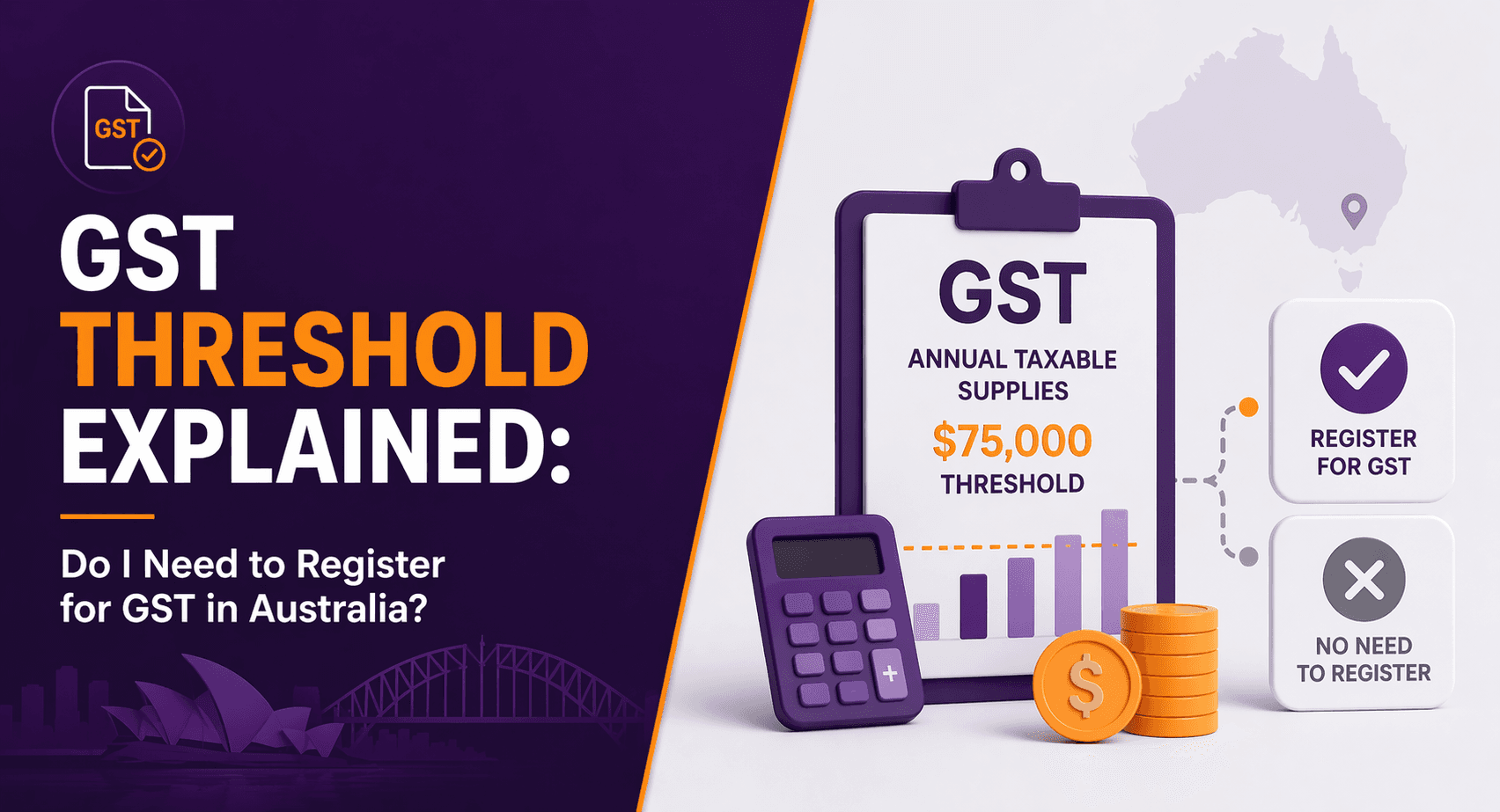
$75,000 per year for most businesses
$150,000 per year for non-profit organisations
This is based on GST turnover, not profit.
Important: The threshold is based on your gross business income, not how much money you take home.
Example: Turnover vs profit
If your business income is $80,000 but your expenses are $40,000, your turnover is still $80,000, even though your profit is only $40,000.
That means you may still need to register for GST.
What Is “GST Turnover”?
This is where many Australians get caught out.
GST turnover is your business’s total sales (income) from your activities, excluding GST itself.
It includes:
your taxable sales
your GST-free sales (like some health or education services)
It generally excludes:
input-taxed sales (like residential rent)
sales of capital assets (like selling business equipment)
private or hobby income
The ATO uses two turnover tests:
1) Current GST turnover
Your turnover for the current month and the previous 11 months.
2) Projected GST turnover
Your expected turnover for the current month and the next 11 months.
You must register if:
your current GST turnover is at or above the threshold
ORyour projected GST turnover is at or above the threshold
This prevents businesses from delaying GST registration by waiting until they “officially hit” $75,000.
When Do I Need to Register for GST?
You must register for GST within 21 days of meeting the threshold.
The threshold isn’t just when you cross it once, it's when you expect your turnover will reach it, or you are already operating at that level.
Common situations where registration becomes required:
your income increases due to new clients
you win a bigger contract
your business grows faster than expected
you start charging more
you take on additional work
you shift from part-time to full-time contracting
If you think you’ll hit the threshold soon, it’s often safer to plan early rather than wait until the last minute.
Do I Need to Register for GST as a Sole Trader?
Yes, sole traders follow the same GST threshold rules.
If your GST turnover is expected to be $75,000 or more, you must register.
This applies whether you are:
a tradie
a consultant
a freelancer
a contractor
an online store owner
a delivery driver (depending on income)
a service provider
Many sole traders accidentally miss GST registration because:
income rises quickly
they don’t track turnover properly
they assume GST only applies to “companies” (it doesn’t)
Examples: Do You Need to Register for GST?
Let’s make this practical.
Example 1: Below the threshold
Amrita is a freelance graphic designer.
She earns around $5,000 per month = $60,000 per year.
She is below $75,000: GST registration is not required
But she may choose to register voluntarily.
Example 2: Approaching the threshold
Josh is a contractor and earns $6,500 per month = $78,000 per year.
He is above $75,000: GST registration is required
He should register within 21 days once he expects his turnover will stay above that threshold.
Example 3: Seasonal business that spikes
Lina runs a catering business and expects:
$40,000 turnover over 9 months
plus $40,000 over Christmas season
Her projected turnover is $80,000: GST registration is required
Even if she hasn’t earned $75,000 yet, she’s expected to hit it.
Example 4: Business sells GST-free products
Tariq sells products that are mostly GST-free, but his turnover is $100,000.
Turnover is above $75,000: GST registration is still required
Even if what you sell is GST-free, GST turnover may still count.
What Happens If You Don’t Register When You Should?
This is where things can get painful.
If you should have registered but didn’t, the ATO may still require you to:
pay GST on your sales from the point you should have registered
potentially apply penalties and interest
backdate your registration
lodge overdue BAS statements
The tricky part:
If you didn’t add GST to your invoices, you may have to pay the GST out of your own pocket.
That’s why early registration and planning is often much safer.
Can I Register for GST Voluntarily?
Yes, you can register for GST even if your turnover is below $75,000.
And for some businesses, this can be beneficial.
You might voluntarily register if:
you have significant business expenses and want GST credits
you sell mainly to other GST-registered businesses
you want to appear more “established”
you plan to grow and hit the threshold soon
your pricing structure already supports GST being added
You might avoid registering if:
your clients are mostly everyday consumers (price sensitive)
your turnover is well below $75,000
you want to keep admin simple
you don’t want to lodge BAS regularly
you’re not ready to handle GST cash flow
Pros and Cons of GST Registration
Pros
you can claim GST back on eligible business expenses
you may look more professional to clients
you’re ready for growth
easier transition when you hit the threshold
Cons
you must lodge BAS (quarterly or monthly)
you must track GST properly
cash flow impact: GST collected isn’t your money
price perception can change if you sell to consumers
more accounting work
How GST Works Once You’re Registered (Simple)
Once registered, your business generally needs to:
1) Add GST to taxable sales
For example:
You charge $1,000 + GST = $1,100
The extra $100 is GST
2) Claim GST credits on eligible expenses
For example:
You buy business equipment for $550 (including $50 GST)
You may claim back the $50 as a GST credit (if eligible)
3) Lodge BAS and pay or receive the difference
At BAS time:
GST collected from customers
minusGST credits from expenses
= amount payable (or refundable)
How to Know If You’re Close to the GST Threshold
Here’s a simple checklist:
Check your average monthly business income
$75,000 per year ≈ $6,250 per month
If you’re consistently earning around that level, you may be required to register.
Check projected contracts or seasonal spikes
If you have a signed contract, strong pipeline, or known seasonal income, your projected turnover may exceed the threshold even if current earnings haven’t.
Track turnover monthly (not just at tax time)
Many businesses only check income at the end of year. But GST registration is based on ongoing turnover monitoring.
Key
GST registration is required if your GST turnover is $75,000+ (most businesses)
It’s based on turnover (income), not profit
The ATO uses both current and projected turnover tests
You must register within 21 days once required
You can register voluntarily if below the threshold
Not registering when required can lead to backdated GST bills and penalties
Getting advice early can save a lot of money and stress
FAQ
1) What is the GST threshold in Australia?
For most businesses, the GST registration threshold is $75,000 per year in GST turnover. Non-profits generally have a higher threshold.
2) Is the GST threshold based on profit or turnover?
It’s based on turnover (income), not profit.
3) Do I need GST if I’m a sole trader?
Yes, sole traders must register if their GST turnover reaches or is expected to reach the threshold.
4) Can I register for GST if I earn less than $75,000?
Yes. You can register voluntarily, but it means BAS obligations and GST reporting.
5) What happens if I don’t register when I should?
The ATO may backdate your registration and require you to pay GST you should have collected, plus possible penalties and interest.
If your business income is approaching $75,000 per year, GST becomes something you can’t ignore.
The good news is GST registration doesn’t have to be stressful, but timing matters. Registering too late can cost you money, and registering too early can add admin you might not need yet.
If you’re close to the threshold or unsure whether GST applies to your business, getting the right accounting advice early can protect your cash flow and keep your ATO obligations clean.
General Advice Disclaimer
This information is general in nature and does not take into account your personal financial situation, needs, or objectives. You should consider whether it is appropriate for you and seek personal financial advice before making any decisions.
Still asking “what if” about your finances?
That’s exactly where clarity begins.
Whether you’re planning ahead, growing wealth, or simply want confidence in your financial decisions, the advisers at What If Advice can help you turn questions into a clear, personalised plan.
👉 Book a free 15-minute strategy session or get in touch today at
whatifadvice.com.au