Looking for specific financial advice?
This blog provides general educational content. For personalized advice tailored to your unique situation, book a free consultation with our team of ASIC-licensed financial advisers.
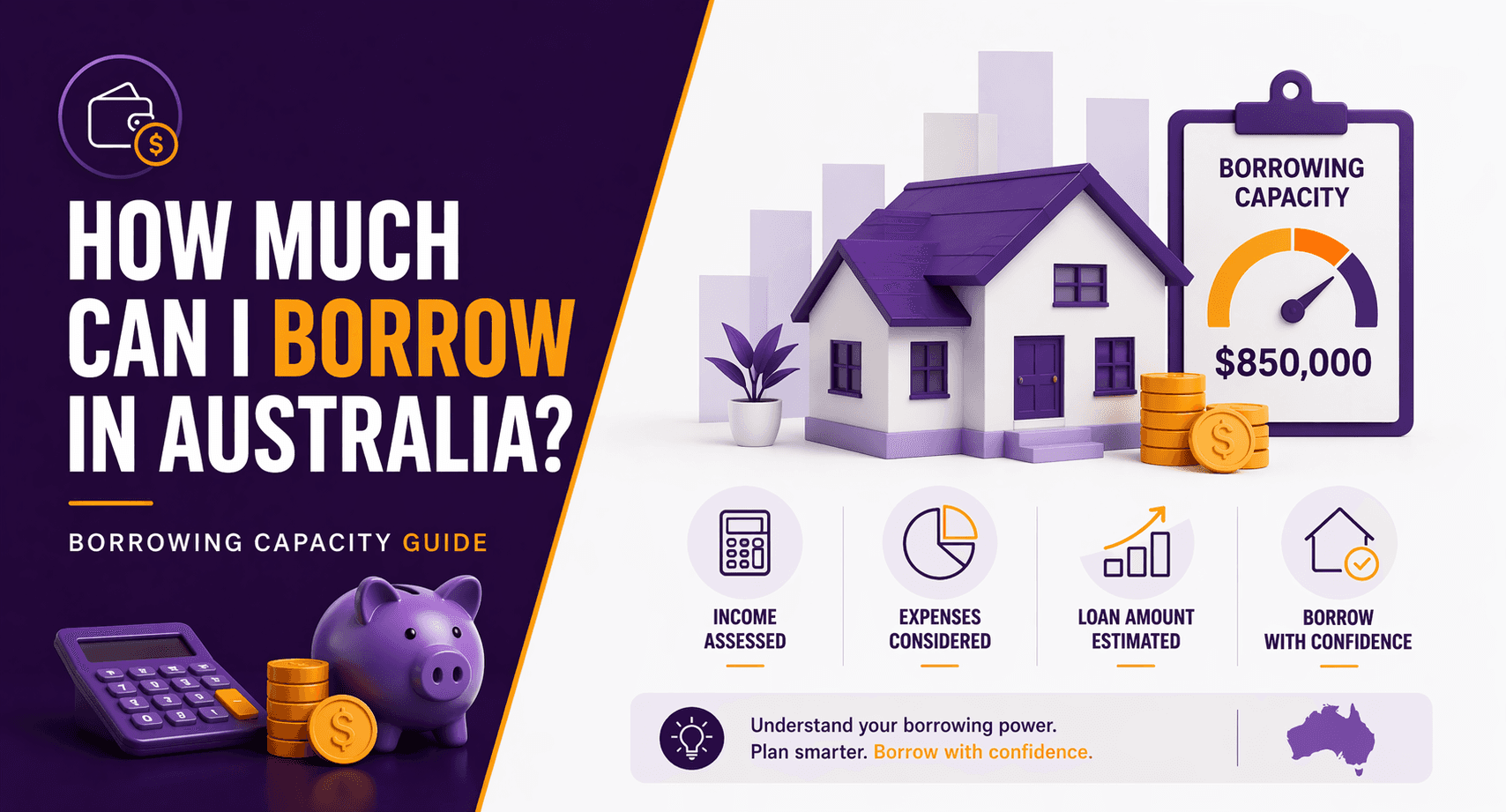
How Much Can I Borrow in Australia? (Borrowing Capacity Guide)
Your borrowing capacity is the maximum amount a lender is willing to lend you.
It’s not just based on your income.
It’s based on how well you can repay the loan under pressure.
If you want a quick answer:
Most Australians can borrow 5–6 times their income
But that’s a rough guide. The actual number depends on several factors.
How Lenders Calculate Borrowing Capacity
Banks assess your serviceability, your ability to repay the loan.
They look at:
Income
Expenses
Existing debts
Interest rate buffers
Then they stress-test your finances.
Key Factors That Affect Borrowing Capacity
1. Your Income
Includes:
Salary or wages
Bonuses (sometimes discounted)
Business income
Rental income
Higher income = higher borrowing capacity
But it’s not the only factor.
2. Your Expenses
This is where many people get surprised.
Lenders use:
Your actual spending
Or benchmark figures (HEM – Household Expenditure Measure)
Higher expenses = lower borrowing capacity
3. Existing Debts
Includes:
Credit cards
Personal loans
Car loans
HECS/HELP debt
Even unused credit card limits count.
A $10,000 credit limit can reduce borrowing power significantly.
4. Interest Rate Buffer
Lenders assess your loan at a higher rate than current rates.
Example:
Actual rate: 6%
Assessed at: ~9%
This ensures:
You can still repay if rates rise
5. Loan Term
Typical:
25–30 years
Longer term:
Lower repayments
Higher borrowing capacity
6. Deposit Size
A larger deposit:
Reduces loan amount
Improves approval chances
Also affects:
Lenders Mortgage Insurance (LMI)
Simple Borrowing Capacity Example
Scenario | Amount |
Income | $100,000 |
Estimated borrowing | ~$500,000–$600,000 |
Scenario | Amount |
Income | $150,000 |
Estimated borrowing | ~$750,000–$900,000 |
These are indicative only. Actual results vary by lender and circumstances.
How to Increase Your Borrowing Capacity
1. Reduce Existing Debt
Pay down credit cards
Close unused limits
2. Lower Your Expenses
Reduce discretionary spending
Clean up bank statements
3. Increase Your Income
Secondary income streams
Salary increases
Business profitability
4. Improve Your Credit Profile
Pay bills on time
Avoid excessive credit applications
5. Choose the Right Loan Structure
Interest-only vs principal & interest
Loan term adjustments
What Lenders Are Really Looking For
It’s not just numbers.
They want to see:
Consistent income
Controlled spending
Reliable repayment history
Stability matters more than spikes in income.
Common Mistakes
1. Relying on Online Calculators
They’re estimates, not approvals.
2. Ignoring Living Expenses
Banks don’t.
3. Keeping High Credit Limits
Even if unused, they reduce borrowing capacity.
4. Overestimating Affordability
Just because you can borrow it doesn’t mean you should.
Strategic Insight: Borrowing Capacity ≠ Buying Power
The bank may approve:
$800,000
But your comfort level might be:
$600,000
The goal isn’t:
Maximise borrowing
It’s:
Maintain financial flexibility and lifestyle
When Should You Get Advice?
You should consider advice if:
You’re planning to buy property
You’re unsure how much you can borrow
Your income structure is complex
You want to optimise borrowing capacity
Because:
Small changes can significantly impact your borrowing power.
FAQs
1. How much can I borrow based on my salary?
Typically around 5–6 times your income, but it depends on expenses, debts, and lender criteria.
2. Do credit cards affect borrowing capacity?
Yes. Even unused limits reduce your borrowing power.
3. Does HECS/HELP debt affect borrowing?
Yes. It reduces your net income and borrowing capacity.
4. Can I increase my borrowing capacity quickly?
Yes, by reducing debt, lowering expenses, and improving income.
5. What is a borrowing capacity calculator?
An online tool that estimates how much you may be able to borrow.
6. Why do banks assess at higher interest rates?
To ensure you can afford repayments if rates increase.
7. Should I borrow the maximum amount?
Not necessarily. Borrow within a level that supports your lifestyle and goals.
Not Sure How Much You Can Borrow, or Should Borrow?
Your borrowing capacity is just one part of the picture.
At What If Advice, we help Australians:
Understand their true borrowing position
Structure loans strategically
Make confident property decisions
Book a strategy session to get clarity before you commit.
Disclaimer
This information is general in nature and does not take into account your personal objectives, financial situation, or needs. You should consider whether it is appropriate for your circumstances and seek professional advice. Lending policies and criteria vary between lenders and are subject to change.