Looking for specific financial advice?
This blog provides general educational content. For personalized advice tailored to your unique situation, book a free consultation with our team of ASIC-licensed financial advisers.
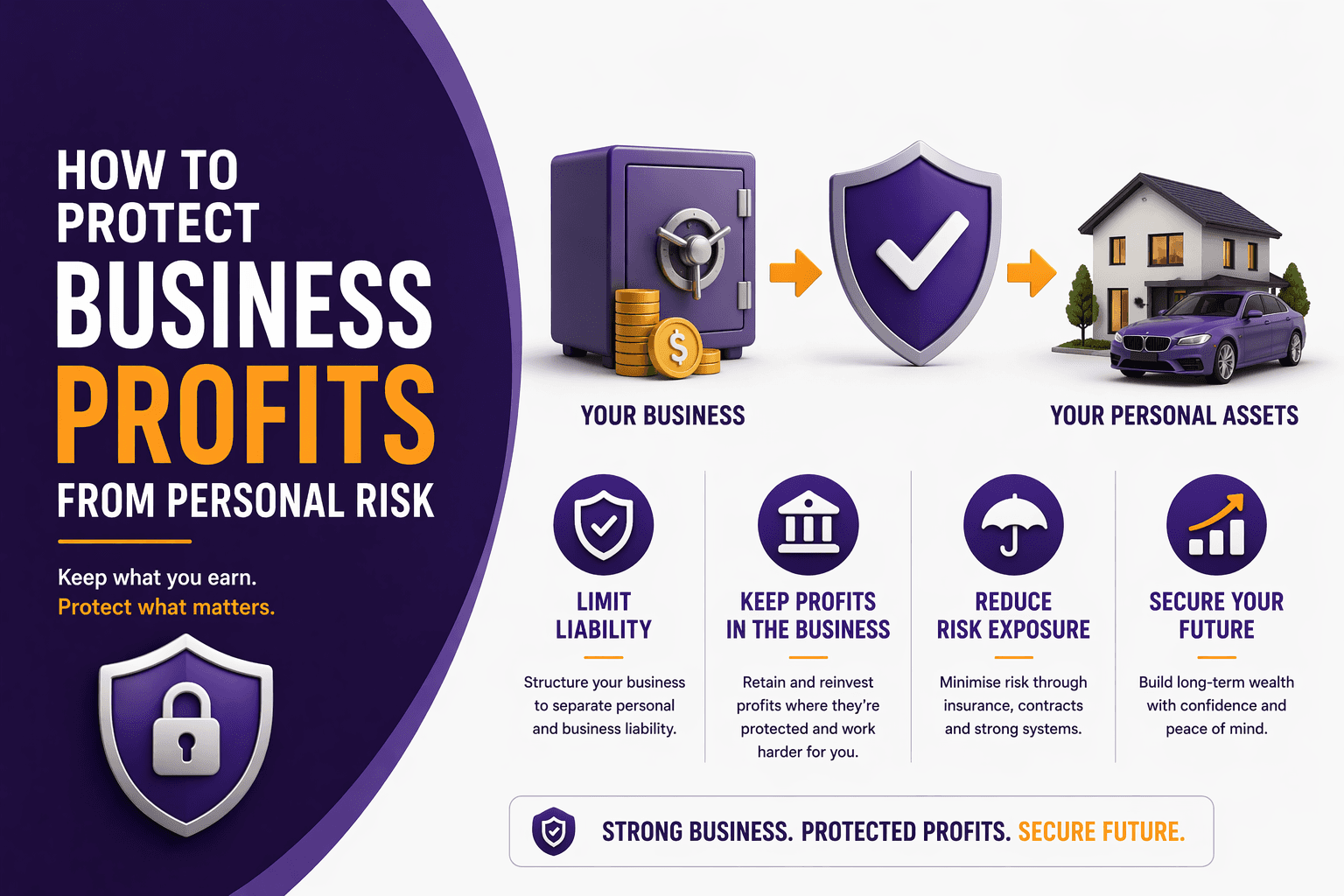
How to Protect Business Profits From Personal Risk (Australia)
If your business is making money but everything is tied to you personally, you don’t really have protection — you have exposure.
And it only takes one:
Lawsuit
Business failure
Personal liability issue
…to wipe out what you’ve built.
Protecting business profits isn’t complicated, but it does require structure, discipline, and planning.
What Is “Personal Risk” for Business Owners?
Personal risk includes anything that could impact you financially outside normal operations:
Legal claims
Business debts
Director liability
Personal guarantees
Divorce or relationship breakdown
Bankruptcy
If your business and personal finances are not properly separated:
These risks can flow directly into your wealth.
Why Structure Matters More Than Income
Many business owners focus on:
Making more money
But ignore:
Where that money sits
Who legally owns it
Reality:
Structure determines protection, not income level.
Strategy 1: Use the Right Business Structure
Sole Trader (High Risk)
No separation between you and the business
Unlimited personal liability
If something goes wrong, your personal assets are exposed.
Company (Better Protection)
Separate legal entity
Limited liability (in most cases)
Business risks are generally contained within the company
Trust Structures (Strategic Protection)
Assets held by a trustee
Beneficiaries do not legally own assets
Adds flexibility and protection when structured correctly
Strategy 2: Separate Business and Personal Assets
One of the most common mistakes:
Mixing everything together
You should:
Keep business income in business structures
Avoid holding significant wealth personally
Separate bank accounts and ownership
Strategy 3: Retain Profits Strategically
Instead of:
Taking all profits personally
Consider:
Retaining profits within a company
Benefits:
Lower tax environment
Reduced exposure to personal liabilities
Strategy 4: Use Holding Structures
A common approach:
Trading entity → runs the business
Separate entity → holds assets
Example:
Company A = trading business
Company B or trust = holds investments
If the trading business is sued:
Asset-holding entity is insulated
Strategy 5: Be Careful With Personal Guarantees
Banks and lenders often require:
Personal guarantees
This can:
Override your company protection
You’re personally liable regardless of structure
Strategy:
Limit guarantees where possible
Understand exposure before signing
Strategy 6: Manage Director Risk
As a director, you can still be personally liable for:
Insolvent trading
Unpaid super
Certain tax obligations
Protection includes:
Staying compliant
Monitoring cash flow
Seeking advice early
Strategy 7: Use Insurance as a Backup Layer
Structure is the first line of defence.
Insurance is the backup.
Types to consider:
Public liability
Professional indemnity
Key person insurance
Example Scenario
Unprotected Structure
Sole trader
Profits held personally
No separation
Outcome:
Legal issue = personal assets at risk
Protected Structure
Business operated through company
Profits retained and structured
Assets held separately
Outcome:
Risk contained
Personal wealth protected
Same business. Very different exposure.
Common Mistakes
1. Staying a Sole Trader Too Long
Simple early, risky later.
2. Treating Company Money as Personal Money
Breaks protection and creates tax issues.
3. No Asset Separation
Everything exposed in one place.
4. Ignoring Legal Advice
Structure isn’t just tax, it’s legal protection.
5. Assuming “It Won’t Happen to Me”
It eventually happens to someone.
Strategic Insight: Protection Is About Layers
No single strategy protects you fully.
You need:
Legal structure
Financial separation
Tax planning
Insurance
Think of it as a system, not a single fix.
When Should You Get Advice?
You should seek advice if:
Your business is generating consistent profits
You’re exposed to liability
You’re growing or hiring
You’re unsure about your structure
Because:
The best time to protect your assets is before something goes wrong.
FAQs
1. Can a company fully protect my personal assets?
Not completely. It provides limited liability, but personal guarantees and director obligations still apply.
2. Is a trust better than a company for asset protection?
They serve different purposes. Often used together for effective structuring.
3. What is the biggest risk for business owners?
Mixing personal and business finances.
4. Should I keep profits in the company?
In many cases, yes. But it depends on your overall strategy.
5. Are personal guarantees risky?
Yes. They can expose your personal assets even if you use a company.
6. When should I change my structure?
Usually when profits grow or risk increases.
7. What is the most common mistake?
Ignoring asset protection until it’s too late.
Is Your Business Actually Protecting You or Exposing You?
Making money is one thing. Protecting it is another.
At What If Advice, we help business owners:
Structure their business for protection
Separate personal and business risk
Build long-term, secure wealth
Book a strategy session to make sure what you’re building is actually protected.
Disclaimer
This information is general in nature and does not take into account your personal objectives, financial situation, or needs. You should consider whether it is appropriate for your circumstances and seek professional advice. Legal and taxation rules, including director obligations and asset protection structures, are subject to change.