Looking for specific financial advice?
This blog provides general educational content. For personalized advice tailored to your unique situation, book a free consultation with our team of ASIC-licensed financial advisers.
What If Your Tenant Causes Damage and Your Policy Doesn't Actually Cover It?
Landlord insurance is widely assumed to be a comprehensive safety net for anything that could go wrong with a rental property, and that assumption is exactly where a lot of investors come unstuck. Policies vary significantly between insurers, carry genuine exclusions and limitations, and often require specific conditions to be met, like using a property manager, for certain cover to apply at all. Understanding precisely what's covered, and what isn't, before something goes wrong is considerably more useful than finding out during a claim.
TL;DR
Landlord insurance is a different product to standard home and contents insurance, specifically designed around the risks of renting a property to tenants rather than living in it yourself.
Core cover typically includes building damage, loss of rental income in certain circumstances, and liability cover, though specifics vary meaningfully between insurers and policies.
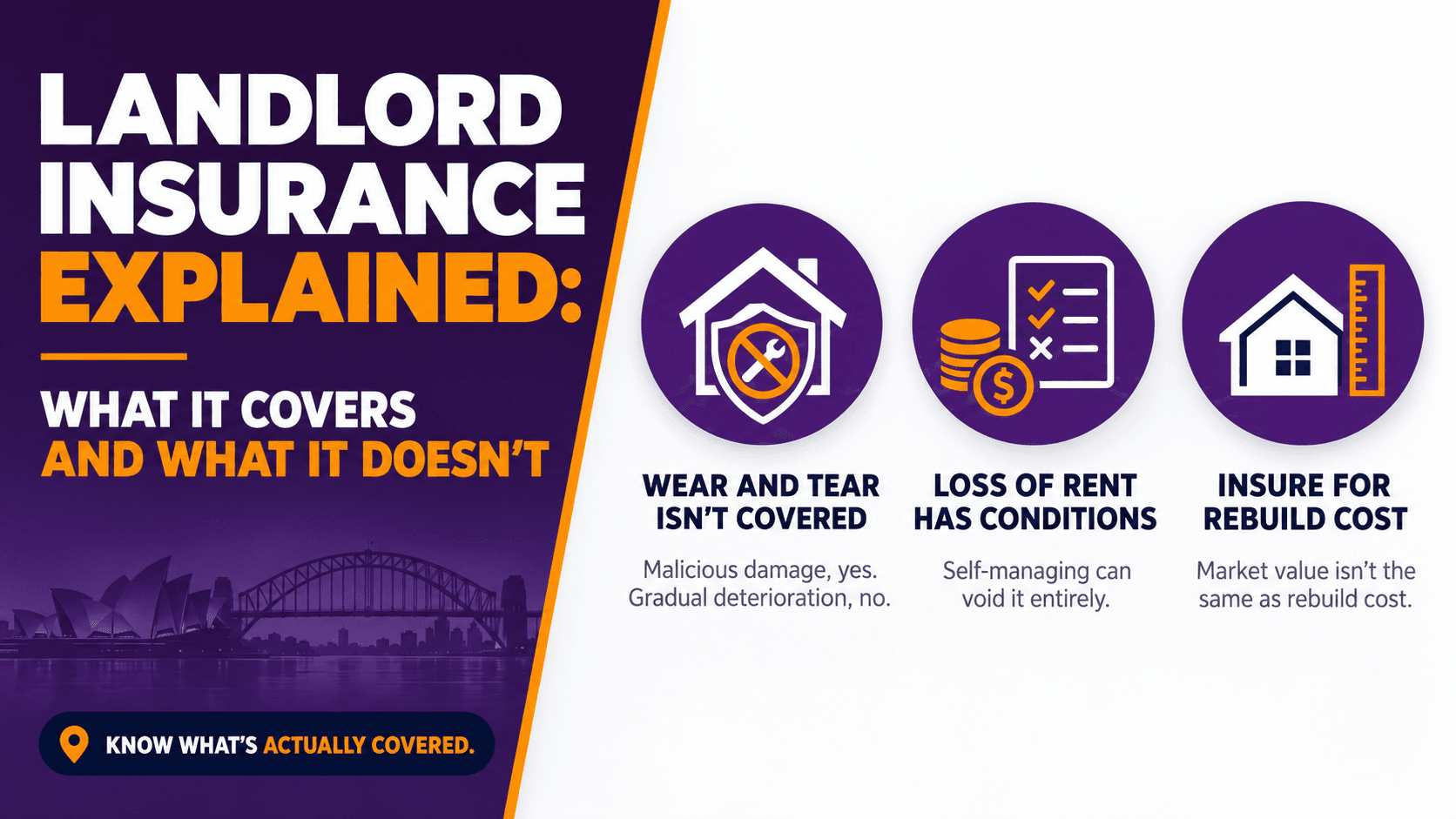
Malicious or intentional tenant damage is commonly covered, but accidental damage, general wear and tear, and gradual deterioration are generally excluded or treated differently.
Loss of rent cover often has specific conditions attached, such as requiring a professional property manager, or only applying after a defined waiting period or in specific circumstances like tenant default following an eviction process.
Underinsuring the building itself is a common and costly mistake, since the insured amount needs to reflect genuine rebuild cost, not simply the property's purchase price or market value.
Short-stay and Airbnb-style rentals often require a different insurance product entirely, standard landlord insurance may not adequately cover this use case.
Policy exclusions and conditions should be read directly, rather than assumed from a general understanding of what "landlord insurance" typically covers, since the specific product details are what actually matter at claim time.
Bottom line: landlord insurance genuinely helps manage the specific risks of renting out a property, but the gap between what people assume it covers and what a specific policy actually covers is exactly where investors get caught out, usually at claim time, which is the worst possible moment to find out.
On This Page
Why Landlord Insurance Is a Different Product to Home Insurance
What's Typically Covered
What's Commonly Excluded or Limited
Loss of Rent Cover: The Conditions That Matter
Underinsurance: Getting the Building Cover Amount Right
Short-Stay Rentals Need a Different Approach
Worked Example: A Claim That Didn't Go the Way the Landlord Expected
Common Mistakes
FAQ
Why Landlord Insurance Is a Different Product to Home Insurance
Landlord insurance is specifically designed around the risks of renting a property to someone else, risks a standard owner-occupier home and contents policy generally isn't built to address, including tenant-related damage, loss of rental income, and liability specific to a rental arrangement. WIAA does not sell general insurance directly, but understanding how landlord insurance differs from standard home insurance is a genuinely important part of structuring an investment property purchase properly.
Not sure whether your current insurance on an investment property is actually structured as landlord cover, or still set up as a standard home policy? A free 15-minute chat with WIAA can help you think through what to check. Call 1800 942 843 or book online.
Bottom line: a standard home and contents policy isn't designed for the specific risks of a tenanted property, which is exactly why a purpose-built landlord policy exists, and exactly why the two shouldn't be assumed interchangeable.
What's Typically Covered
While specific inclusions vary by insurer and policy, landlord insurance commonly includes:
Building cover, for damage to the physical structure from events like fire, storm, or flood, similar to standard building insurance.
Contents cover, where the landlord owns items within the property, such as furniture in a furnished rental.
Malicious or intentional damage by a tenant, generally covered, since this is one of the specific risks the product is designed to address.
Loss of rental income, in defined circumstances, such as the property becoming uninhabitable due to an insured event, or in some cases tenant default, though this generally comes with specific conditions attached.
Liability cover, protecting the landlord if someone is injured on the property and the landlord is found liable.
Bottom line: core landlord insurance cover addresses the building, certain tenant-caused damage, some loss of rent scenarios, and liability, though the specific scope and conditions attached to each differ meaningfully between policies.
What's Commonly Excluded or Limited
Equally important is understanding what's typically not covered, or only covered with specific conditions:
General wear and tear, gradual deterioration from normal use is generally excluded across virtually all policies, this isn't something any landlord insurance product covers.
Accidental damage by a tenant (as opposed to malicious or intentional damage) is sometimes excluded or only available as an additional optional add-on, depending on the policy.
Damage from known maintenance issues, such as a known plumbing issue left unaddressed, generally isn't covered.
Pest infestations, commonly excluded from standard building and landlord policies.
Gradual deterioration or poor maintenance-related damage more broadly, distinct from a specific, sudden insured event.
The gap between what's assumed to be covered and what a specific policy actually covers is where most landlord insurance disappointment happens. A free 15-minute chat can help you think through what to check before you need to rely on it. Email clientservices@whatifadvice.com.au or book online.
Bottom line: wear and tear, known maintenance issues, and often accidental (non-malicious) tenant damage sit outside standard cover, and assuming otherwise is a common and costly mistake.
Loss of Rent Cover: The Conditions That Matter
Loss of rent cover, compensating a landlord for lost rental income in specific circumstances, is one of the most valuable but also most conditionally structured parts of a landlord policy. Common conditions include requiring the property to be managed by a licensed property manager for certain tenant-default cover to apply at all, requiring a formal eviction or tribunal process to have been followed before default-related cover kicks in, and applying only after a defined waiting period or up to a capped maximum duration. A landlord self-managing their property, or skipping formal processes to save time, can unknowingly void this specific cover entirely.
Bottom line: loss of rent cover often comes with specific procedural conditions attached, and not meeting them, even with good intentions, can mean a claim that would otherwise have been valid simply isn't.
Underinsurance: Getting the Building Cover Amount Right
A genuinely common and costly mistake is insuring a rental property's building for an amount based on its purchase price or current market value, rather than its actual rebuild cost, the cost to fully reconstruct the property if it were completely destroyed, which can differ substantially from market value, particularly for older or architecturally distinctive properties. Underinsuring in this way means a landlord can be significantly out of pocket even with a valid claim, if the insured amount simply doesn't reflect what rebuilding would actually cost.
Bottom line: a property's market value and its actual rebuild cost are frequently different figures, and insuring based on the wrong one is a common way landlords end up underinsured without realising it until a major claim exposes the gap.
Short-Stay Rentals Need a Different Approach
A property let out through Airbnb or similar short-stay platforms generally falls outside standard landlord insurance, which is typically designed around a long-term tenancy arrangement rather than frequent, short-term guest turnover. A different, purpose-built short-stay rental insurance product is generally needed, and using standard landlord insurance for a short-stay rental can mean a claim is denied entirely if the insurer determines the actual use of the property didn't match the policy it was insured under. For the tax side of a short-stay rental specifically, our St Kilda guide covers the apportionment and GST mechanics in depth, worth reading alongside this insurance point if you're running a short-stay property.
Bottom line: a short-stay rental is a genuinely different risk profile to a standard long-term tenancy, and insuring it under a standard landlord policy risks having a claim denied outright for not matching the property's actual use.
Worked Example: A Claim That Didn't Go the Way the Landlord Expected
Trent self-manages his rental property directly, without a licensed property manager, to save on management fees. When his tenant stops paying rent and eventually needs to be evicted through a lengthy tribunal process, Trent expects his landlord insurance to cover the lost rental income during this period, only to discover his specific policy's loss of rent cover for tenant default requires the property to have been managed by a licensed property manager, a condition he didn't meet by self-managing.
Separately, when assessing his building cover after this experience, Trent discovers his policy's insured building amount was set based on his purchase price from several years earlier, considerably below what it would actually cost to rebuild the property today given rising construction costs.
Outcome: Trent's self-management choice, made to save on fees, inadvertently voided cover he assumed would apply, and a separate underinsurance gap on the building itself went unnoticed until he reviewed it properly, both avoidable had the policy's specific conditions and figures been checked earlier.
Bottom line: Trent's situation illustrates two of the most common landlord insurance gaps at once, a condition-based exclusion he didn't realise applied, and a building sum insured that hadn't kept pace with actual rebuild costs.
Common Mistakes
Assuming landlord insurance covers general wear and tear. This is excluded across virtually all policies, regardless of insurer.
Self-managing a rental without checking whether loss of rent cover requires a licensed property manager. This specific condition can void an otherwise valid claim.
Insuring the building based on purchase price or market value rather than actual rebuild cost. This is a common and significant source of underinsurance.
Using standard landlord insurance for a short-stay or Airbnb-style rental. This use case generally requires a different, purpose-built insurance product.
Not reading the specific policy's exclusions and conditions directly. Assuming general landlord insurance coverage without checking the actual policy details is exactly how gaps get discovered at the worst possible time.
Checking your landlord insurance policy's specific conditions and cover amounts before you need to rely on it is considerably better than discovering a gap during a claim. A free 15-minute chat can help you think through what to review. Call 1800 942 843.
FAQ
Does landlord insurance cover general wear and tear from tenants? No, generally excluded across virtually all policies, wear and tear is considered a normal cost of property ownership rather than an insurable event.
Does landlord insurance cover accidental damage caused by a tenant? This varies by policy, some cover it as standard, others only as an optional add-on, or exclude it in favour of only covering malicious or intentional damage, worth checking the specific policy directly.
Do I need a property manager to get landlord insurance? Not necessarily to get a policy at all, but certain cover, particularly loss of rent cover for tenant default, often specifically requires a licensed property manager as a condition of that cover applying.
Is landlord insurance the same as standard building insurance? No, landlord insurance is a specific product addressing tenant-related risks alongside building cover, distinct from standard owner-occupier home and contents insurance.
How do I know if my building is insured for the right amount? The insured amount should reflect the property's actual rebuild cost, not its purchase price or market value, which may require a specific assessment rather than a general estimate.
Does landlord insurance cover an Airbnb or short-stay rental? Generally not adequately, short-stay rentals typically need a different, purpose-built insurance product rather than standard landlord insurance designed around long-term tenancies.
What happens if I make a claim and the circumstances don't match my policy's conditions? The claim can be denied, which is exactly why understanding specific policy conditions, such as property manager requirements for loss of rent cover, matters before relying on the policy.
Can WIAA arrange landlord insurance for me? WIAA does not sell general insurance directly, but can help you understand how landlord insurance fits into your broader investment property planning and what to check when comparing policies.
Does landlord insurance cover pest infestations? Generally not, pest infestations are a commonly excluded item across standard building and landlord insurance policies.
Should I review my landlord insurance policy periodically, or is it a set-and-forget purchase? It's worth reviewing periodically, particularly the building's insured amount against current rebuild costs, and any changes to how the property is managed or used, since these can directly affect what cover actually applies.
Ready to Understand What Your Landlord Insurance Actually Covers?
The gap between assumed cover and actual policy conditions is where most landlord insurance disappointment happens. A free 15-minute chat can help you think through what to check before you need to rely on it.
Call us: 1800 942 843
Book online: free 15-minute chat, no cost, no pressure
Still asking what if.
WIAA has helped Australian property investors understand what their insurance actually covers as part of a broader investment property strategy, across Toowong, Grange, and Melbourne CBD. WIAA operates under AFSL 528250 as an Authorised Representative of Beryllium Advisers Pty Ltd.
General Advice Disclaimer: This article contains general information only and does not take into account your personal objectives, financial situation, or needs. It is not personal financial advice and should not be relied upon as such. WIAA does not sell general insurance directly. Specific policy terms, exclusions, and conditions vary significantly between insurers and should be reviewed directly with the relevant insurer or a qualified insurance broker before relying on any cover.