Looking for specific financial advice?
This blog provides general educational content. For personalized advice tailored to your unique situation, book a free consultation with our team of ASIC-licensed financial advisers.
Retirement should be a time of freedom, not financial stress.
But many Australians make avoidable mistakes that can:
reduce their super faster than expected
trigger unnecessary tax
reduce Age Pension eligibility
create cash flow anxiety
or leave them financially vulnerable later in life
The problem isn’t usually a lack of effort, it’s a lack of clarity.
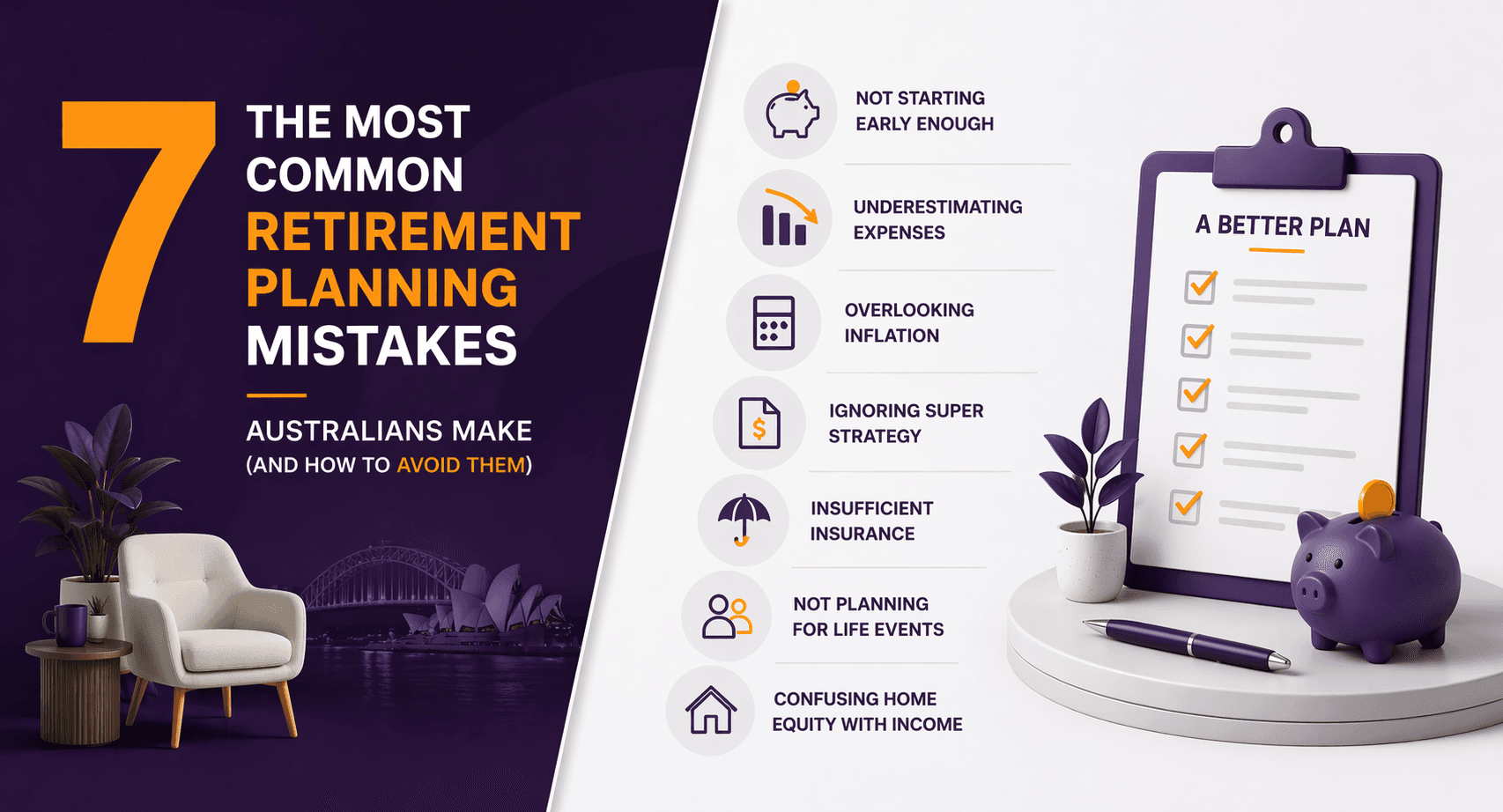
Here are the 7 most common retirement planning mistakes Australians make, and how to avoid them.
1) Underestimating How Long Retirement Will Last
One of the biggest mistakes? Planning for a short retirement.
If you retire at 60 and live to 90, that’s 30 years your super needs to last.
Many people plan for:
15–20 years
then run into problems later.
Why this is risky
Medical costs can rise with age
Investment returns aren’t guaranteed
Inflation quietly erodes purchasing power
Aged care costs may apply later
How to avoid it
Model retirement to age 90+
Build in a buffer
Review drawdown rates regularly
Avoid aggressive early withdrawals unless planned
2) Assuming “The Age Pension Will Cover Me”
The Age Pension is a valuable safety net, but it’s not designed to fund a high-comfort lifestyle.
Many Australians misunderstand:
how the assets test works
how the income test applies
how super affects eligibility
And pension rules can change over time.
Why this is risky
You may not qualify for the full pension
You may only receive a part pension
You may lose eligibility if assets increase
How to avoid it
Understand both income and assets tests
Don’t rely solely on pension assumptions
Plan retirement income independently first
Treat the Age Pension as a supplement, not a strategy
3) Accessing Super Without a Withdrawal Strategy
Reaching preservation age doesn’t mean you should withdraw randomly.
Common mistakes include:
taking large lump sums without modelling
drawing too much too early
switching to overly conservative investments
not understanding tax components
Why this is risky
You can reduce long-term growth
You may create avoidable tax
You increase the chance of running out of money
How to avoid it
Decide between lump sum vs pension strategy
Understand minimum drawdown rules
Review your super’s investment mix in retirement
Model multiple drawdown scenarios
Retirement isn’t just about accessing super, it’s about managing it properly.
4) Ignoring Inflation
Inflation quietly erodes retirement income over time.
$60,000 today won’t buy the same lifestyle in 15–20 years.
If your super is invested too conservatively for too long, it may not keep up with inflation.
Why this is risky
Spending power declines
Healthcare and aged care costs rise
Lifestyle gradually shrinks
How to avoid it
Keep some growth exposure in retirement
Review investment strategy annually
Plan for rising costs, not static expenses
Retirement portfolios still need growth, just balanced with risk management.
5) Not Reviewing Super Structure Before Retirement
Many Australians reach retirement age and still:
have multiple super accounts
pay unnecessary insurance premiums
have outdated beneficiaries
haven’t reviewed their investment options
Why this is risky
Fees erode returns
Insurance may no longer be needed
Estate planning can become messy
Investment strategy may not match retirement goals
How to avoid it
Consolidate super (if appropriate)
Review insurance inside super
Update binding death benefit nominations
Review asset allocation before retirement
A “set and forget” super strategy doesn’t work at retirement.
6) Forgetting About Healthcare and Aged Care Costs
Retirement planning often focuses on travel and lifestyle, not healthcare.
Later-life expenses can include:
increased medical costs
private health premiums
home care
residential aged care
These costs can significantly affect retirement income.
Why this is risky
You may underestimate required savings
Sudden health changes can strain cash flow
Family may need to step in financially
How to avoid it
Build a contingency buffer
Understand how aged care funding works
Factor health-related expenses into retirement modelling
Review insurance options before retirement
7) Not Having a Clear Retirement Income Plan
This is the biggest mistake of all.
Many people retire with:
a super balance
no structured income plan
no spending strategy
no tax planning
no Centrelink modelling
They simply “draw what feels right.”
Why this is risky
Inconsistent income
Anxiety about running out
Overdrawing in strong markets
Under-spending out of fear
How to avoid it
A proper retirement income plan should cover:
expected annual spending
income sources (super, pension, investments)
drawdown strategy
tax position
Centrelink impact
investment allocation
estate planning
Retirement should feel controlled, not uncertain.
Bonus Mistake: Relying Only on Business Sale or Property
Many Australians assume:
“I’ll just sell the business.”
or
“The house will sort it out.”
But:
Business sale values can fluctuate
Property markets move
Timing isn’t always perfect
Liquidity matters
Diversification matters in retirement, super provides structure and tax effectiveness that business equity alone doesn’t.
What Smart Retirement Planning Looks Like
Avoiding these mistakes usually means doing five things well:
1) Clear retirement goals
What lifestyle do you actually want?
2) Realistic budgeting
Separate essentials from discretionary spending.
3) Structured income plan
Decide how super will be accessed and invested.
4) Centrelink awareness
Understand how the assets and income tests affect you.
5) Regular reviews
Retirement planning is not a one-time event.
Key Takeaways
Plan for a long retirement (30+ years is common)
Don’t rely solely on the Age Pension
Create a structured super withdrawal strategy
Account for inflation and healthcare costs
Review super accounts and investment structure before retiring
Build a retirement income plan, not just a retirement balance
Regular reviews reduce risk and increase confidence
FAQ (5 Questions with Short Answers)
1) What is the biggest retirement planning mistake?
Not having a structured retirement income plan. A balance without a strategy creates uncertainty.
2) How much should I withdraw from super each year?
It depends on your age, super balance, lifestyle and longevity assumptions. Many planners use conservative drawdown rates to reduce the risk of running out.
3) Does the Age Pension replace super?
No. The Age Pension is designed as a safety net, not a full lifestyle replacement.
4) Should I invest conservatively once I retire?
Not necessarily. Most retirees still need some growth exposure to manage inflation risk.
5) How often should I review my retirement plan?
At least annually, and whenever there’s a major life or financial change.
Conclusion
Retirement planning mistakes are rarely dramatic, they’re usually small oversights that compound over time.
The good news?
Most of them are avoidable with clear modelling and structured advice.
If you’re approaching retirement or already retired, it’s worth asking:
Do I have a proper income plan?
Am I relying on assumptions?
Have I stress-tested my super?
Do I understand how Centrelink fits into the picture?
Want to avoid these mistakes and retire with confidence?
At What If Advice, we help Australians create structured, tax-aware retirement plans that align super, pension eligibility and lifestyle goals.
Book a Retirement & Super Workshop and get a clear plan for your next stage.
General Advice Disclaimer
This information is general in nature and does not take into account your personal financial situation, needs, or objectives. You should consider whether it is appropriate for you and seek personal financial advice before making any decisions.