Looking for specific financial advice?
This blog provides general educational content. For personalized advice tailored to your unique situation, book a free consultation with our team of ASIC-licensed financial advisers.
Using Equity to Buy an Investment Property in Australia
Using equity in your home is one of the most common ways Australians enter the property investment market.
The short answer:
You can use your home’s equity as a deposit to buy an investment property, but it increases your overall risk.
Done well, it can accelerate wealth building. Done poorly, it can stretch your finances and limit future flexibility.
What Is Equity?
Equity is the difference between:
Your property’s value
Your remaining loan balance
Example:
Property value: $900,000
Loan balance: $500,000
Equity = $400,000
But not all of this is usable.
How Much Equity Can You Access?
Most lenders allow borrowing up to 80% of your property value without paying Lenders Mortgage Insurance (LMI).
Example:
Item | Amount |
Property value | $900,000 |
80% lending limit | $720,000 |
Current loan | $500,000 |
Usable equity | $220,000 |
This $220,000 can potentially be used as:
Deposit
Stamp duty
Purchase costs
(Subject to lender policies and your borrowing capacity.)
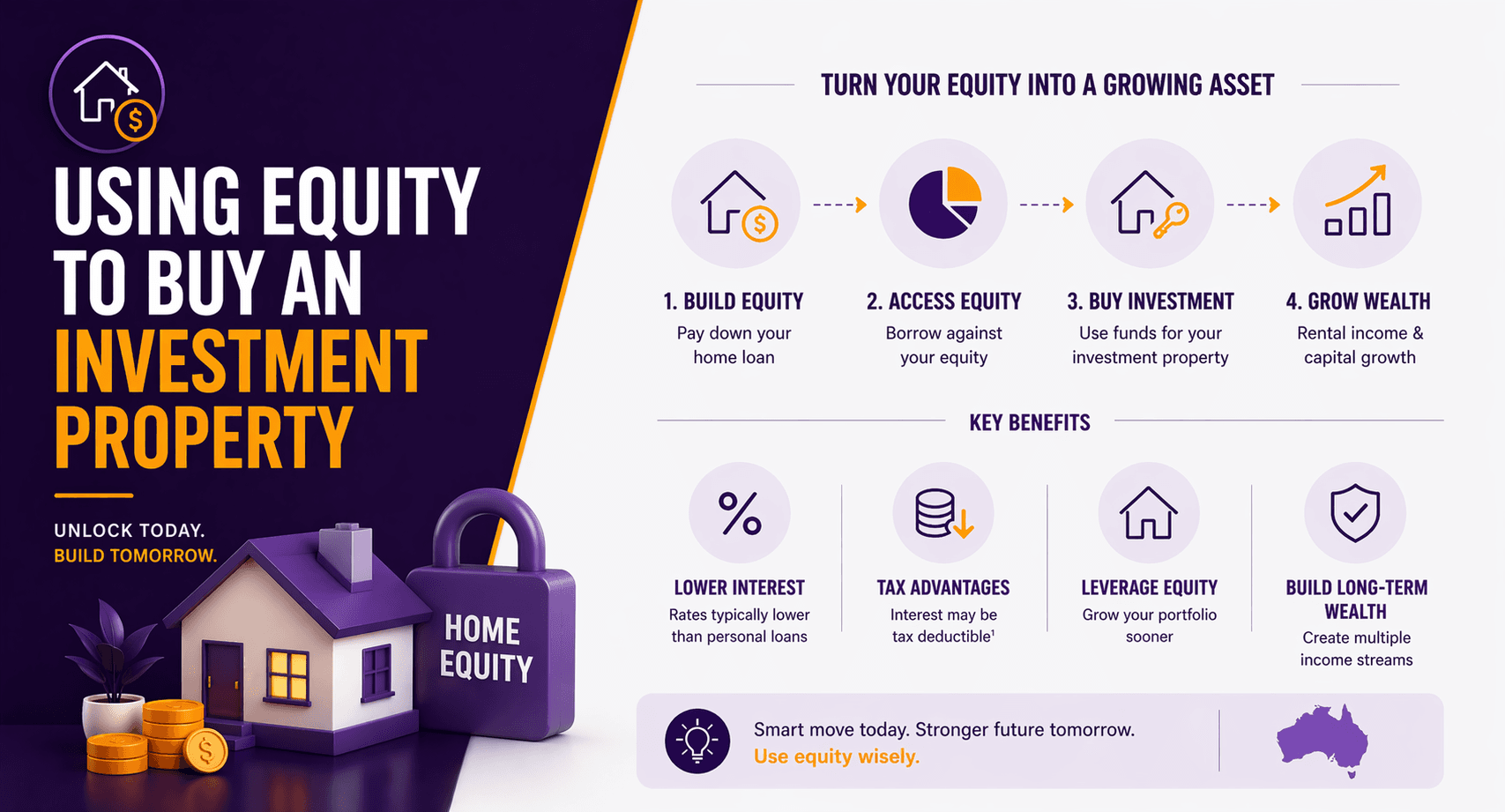
How Using Equity Actually Works
You don’t “withdraw cash” from your house.
Instead, you:
Refinance or top up your existing loan
Create a separate loan split for investment purposes
Use those funds as your deposit
This keeps:
Owner-occupied debt separate
Investment debt structured correctly
Why Australians Use Equity to Invest
1. Enter the Market Sooner
You don’t need to save a full cash deposit.
2. Leverage Growth
If your property has increased in value, you can use that growth to acquire another asset.
3. Build a Property Portfolio
Equity is often used repeatedly to expand a portfolio over time.
Example Scenario
Emma (Melbourne):
Home value: $800,000
Loan: $450,000
Usable equity: ~$190,000
She uses:
$120,000 → deposit
$30,000 → costs
Result:
Purchases a $600,000 investment property
No need to save a separate deposit
Key Risks of Using Equity
This is where things get less exciting and more real.
1. Increased Debt Exposure
You’re increasing your total debt.
If:
Interest rates rise
Rental income drops
You still need to cover repayments.
2. Cash Flow Pressure
Investment properties don’t always cover their own costs.
You may need to fund:
Shortfalls
Maintenance
Vacancies
3. Property Market Risk
If property values fall:
Your equity reduces
Your loan-to-value ratio increases
This can limit future borrowing.
4. Overleveraging
Using too much equity too quickly can leave you financially stretched.
This is how people end up “asset rich, cash poor.”
Equity vs Cash Deposit: What’s the Difference?
Factor | Using Equity | Using Cash |
Upfront savings required | Low | High |
Debt level | Higher | Lower |
Liquidity | Preserved | Reduced |
Risk | Higher | Lower |
Speed to invest | Faster | Slower |
Structuring Your Loan Correctly Matters
This part is often overlooked and quietly causes problems later.
A proper structure may involve:
Separate loan splits
Clear purpose for each loan
Avoiding mixed-use loans
This can affect:
Tax deductibility (subject to ATO rules)
Clarity of repayments
Long-term flexibility
Can You Use Equity Without Refinancing?
Sometimes yes, through:
Loan top-ups
Line of credit
But refinancing often provides:
Better rates
Cleaner loan structure
When Using Equity May Make Sense
Your property has grown in value
You have stable income
You can comfortably manage higher repayments
You have a long-term investment strategy
When It May NOT Be the Right Move
You’re already financially stretched
You’re relying on optimistic rental assumptions
You don’t have a buffer for unexpected costs
You’re unclear on your investment strategy
Key Question: Should You Use Equity to Invest?
Using equity is a strategy, not a shortcut.
It works best when:
It aligns with a broader financial plan
Risks are understood and managed
Borrowing is sustainable
Without that, it becomes speculation disguised as strategy.
FAQs
1. Do I need a deposit to buy an investment property?
Yes, but equity can be used instead of cash savings.
2. Can I use 100% equity to buy property?
In some cases, yes, but you still need sufficient borrowing capacity and may incur higher risk.
3. Will I pay LMI when using equity?
Not if total borrowing remains within 80% LVR (subject to lender rules).
4. Is using equity risky?
Yes. It increases your overall debt and exposure to market and interest rate changes.
5. Can I use equity for multiple properties?
Potentially, if your equity and borrowing capacity allow.
6. Does equity guarantee loan approval?
No. Lenders also assess income, expenses, and credit profile.
7. Is interest on equity loans tax deductible?
It may be if used for investment purposes, subject to current ATO rules and advice from a qualified professional.
Thinking About Using Equity to Invest?
Using equity can be a powerful way to enter the property market sooner and build long-term wealth.
But it also increases your financial exposure and requires careful structuring to avoid costly mistakes.
Before making a decision, it’s important to understand:
How much you can safely borrow
How the loan should be structured
Whether the strategy aligns with your long-term goals
A tailored approach can help ensure you’re not just buying another property, but building a sustainable investment strategy.
Disclaimer
This information is general in nature and does not take into account your personal objectives, financial situation, or needs. You should consider whether it is appropriate for your circumstances and seek professional financial advice. Information is subject to current ATO and Services Australia rules and may change over time.