Looking for specific financial advice?
This blog provides general educational content. For personalized advice tailored to your unique situation, book a free consultation with our team of ASIC-licensed financial advisers.
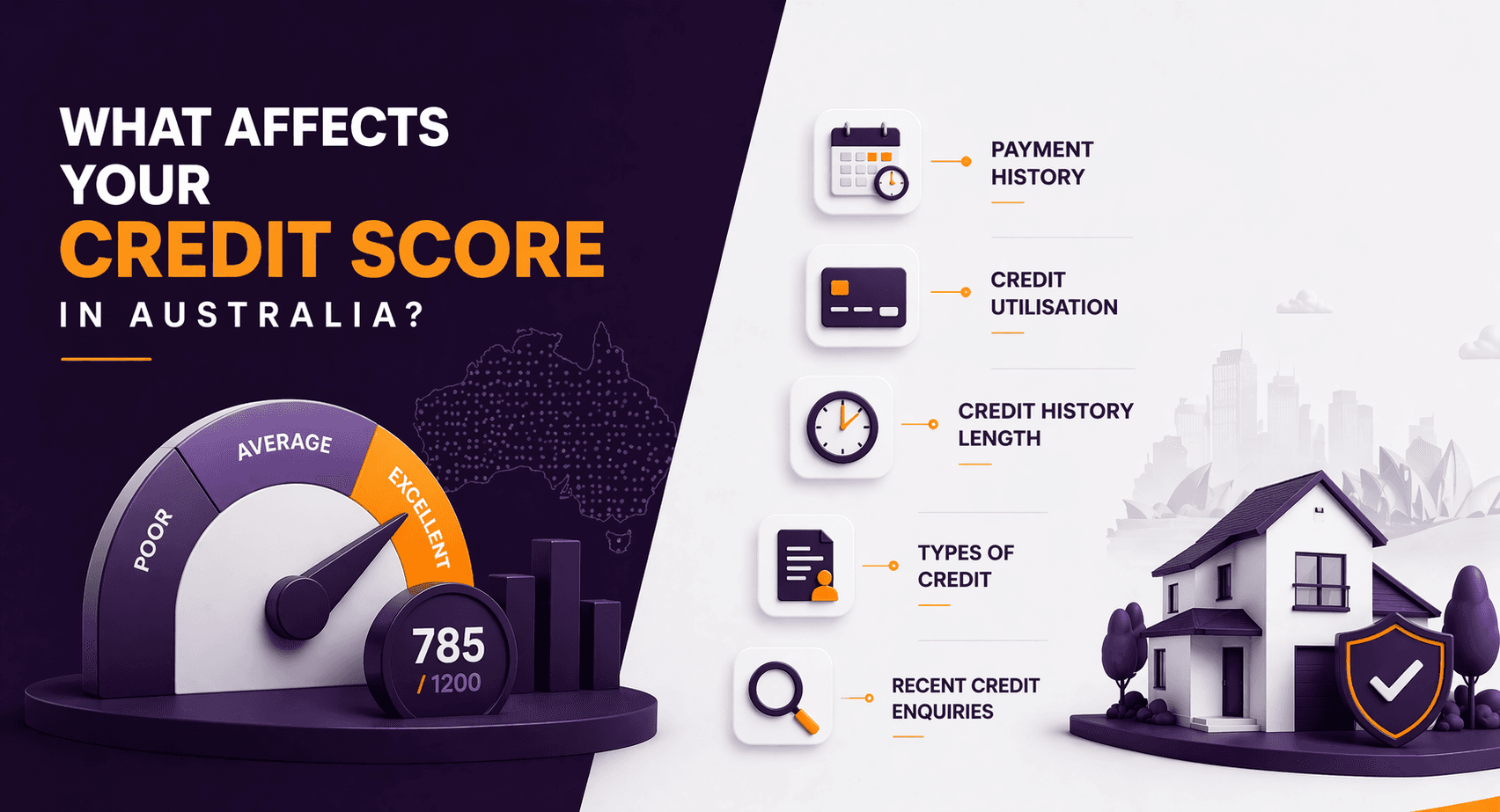
What Affects Your Credit Score in Australia?
Your credit score is a number that helps lenders decide how risky it is to lend you money.
The short answer:
Your score is affected by how you borrow, repay, and manage credit over time.
In Australia, your credit file is tracked by agencies like:
Equifax
Experian
illion
And lenders use this information when assessing loan applications.
What Is a Credit Score?
A credit score is a numerical summary of your credit history.
It reflects:
Your reliability as a borrower
Your repayment behaviour
Your overall credit profile
Different agencies use different scales, but generally:
Score Range | Rating |
Excellent | Very low risk |
Good | Low risk |
Average | Moderate risk |
Below average | Higher risk |
1. Repayment History (One of the Biggest Factors)
Your repayment history shows whether you:
Pay loans on time
Miss or delay payments
Under Australia’s Comprehensive Credit Reporting (CCR) system, lenders can see:
On-time payments
Missed payments (usually 14+ days overdue)
Why It Matters:
Even a few missed payments can lower your score.
Consistent, on-time payments improve it over time.
2. Credit Enquiries (Applications for Credit)
Every time you apply for:
A home loan
Credit card
Personal loan
A record is added to your file.
Why It Matters:
Too many enquiries in a short time can signal financial stress
Lenders may view this as higher risk
Example:
Applying for 5 credit cards in 2 months = red flag
3. Credit Utilisation (How Much You Use)
This refers to:
How much credit you use vs your limits
Example:
Credit card limit: $10,000
Balance: $9,000
You’re using 90% of your limit, which may negatively impact your score.
Why It Matters:
Lower utilisation generally indicates better financial control.
4. Length of Credit History
How long you’ve had credit accounts matters.
Why It Matters:
Longer history = more data for lenders
Shows consistent financial behaviour over time
Closing old accounts can sometimes reduce your score.
5. Types of Credit You Hold
Your mix of credit can include:
Credit cards
Home loans
Personal loans
Why It Matters:
A balanced mix may be viewed more favourably than reliance on high-interest debt.
6. Defaults and Serious Credit Events
A default occurs when a debt remains unpaid for an extended period (subject to reporting thresholds).
Examples:
Unpaid bills
Collections activity
Court judgments or bankruptcy
Why It Matters:
These have a significant negative impact and can remain on your file for years.
7. Buy Now Pay Later (BNPL) and Short-Term Credit
Some BNPL providers may:
Report repayment behaviour
Affect your credit file (depending on provider and reporting practices)
Lenders may also assess BNPL usage as part of your financial behaviour.
8. Comprehensive Credit Reporting (CCR)
Australia uses CCR, meaning lenders can see:
Repayment history
Account balances
Credit limits
This gives a more complete picture compared to older systems.
What Does NOT Directly Affect Your Credit Score?
Contrary to popular belief:
Your income is not part of your credit score
Your savings balance isn’t included
Checking your own credit score does not harm it
Lenders consider these separately during assessments.
How to Improve Your Credit Score
1. Pay All Bills On Time
This includes:
Loans
Credit cards
Utilities
Consistency matters more than perfection.
2. Limit Credit Applications
Only apply for credit when necessary.
Avoid “shopping around” excessively in short periods.
3. Reduce Credit Card Balances
Lower utilisation can improve your score over time.
4. Keep Older Accounts Open (If Appropriate)
Maintaining long-standing accounts can support your history.
5. Check Your Credit Report
You can access your report from:
Equifax
Experian
illion
Check for:
Errors
Incorrect listings
Real-Life Scenario
Maya (Brisbane):
Missed 2 credit card payments
Applied for 3 loans in 1 month
Result:
Credit score dropped
Loan application declined
After:
Paying on time consistently
Reducing applications
Score improved over time.
Key Question: Does Your Credit Score Really Matter?
Yes.
It can affect:
Loan approval
Interest rates
Borrowing capacity
A strong credit profile can save you money and increase your options.
FAQs
1. What is a good credit score in Australia?
It varies by agency, but generally a higher score indicates lower risk to lenders.
2. How long do defaults stay on your credit file?
Typically up to 5 years (subject to current credit reporting rules).
3. Does checking my credit score hurt it?
No. Checking your own score does not affect it.
4. How quickly can I improve my credit score?
Improvements can take time, often several months of consistent behaviour.
5. Do utility bills affect my credit score?
Yes, if they are unpaid and reported.
6. Can I remove incorrect listings?
Yes, you can dispute errors with credit reporting agencies.
7. Do lenders all use the same score?
No. Each lender may use different scoring models and criteria.
Want to Improve Your Borrowing Position?
Your credit score is one part of a broader financial picture, but it plays a key role in how lenders assess your application.
Understanding what affects your score can help you:
Strengthen your borrowing position
Avoid unnecessary rejections
Access better loan options
A structured approach to managing your credit profile can make a meaningful difference when applying for finance.
Disclaimer
This information is general in nature and does not take into account your personal objectives, financial situation, or needs. You should consider whether it is appropriate for your circumstances and seek professional financial advice. Information is subject to current ATO, ASIC, and credit reporting rules and may change over time.